
When dining at a restaurant, navigating the menu requires attention to detail. Read descriptions thoroughly and identify cooking methods such as “grilled,” “fried,” or “baked,” which indicate nutritional content. Grilled items generally contain less fat than fried options, allowing for more health-conscious decisions.
Understanding menu organization is beneficial. Restaurants typically arrange items by course (appetizers, entrees, desserts) and may designate special dietary sections like vegetarian, gluten-free, or low-calorie options. Recognizing these categories can expedite your selection process.
Discussing menu options with dining companions can enhance the experience and provide additional perspectives that may lead to more nutritious choices.
Key Takeaways
- Learn to read and interpret menu items to identify healthier options.
- Choose meals with balanced nutrients and avoid high-calorie, processed foods.
- Control portion sizes to prevent overeating and manage calorie intake.
- Monitor carbohydrate consumption to maintain stable blood sugar levels.
- Limit sodium and alcohol intake to support overall health and well-being.
Making Healthy Choices
Making healthy choices while dining out doesn’t have to be a daunting task. Start by identifying what constitutes a healthy meal for you. This could mean opting for dishes rich in vegetables, lean proteins, and whole grains.
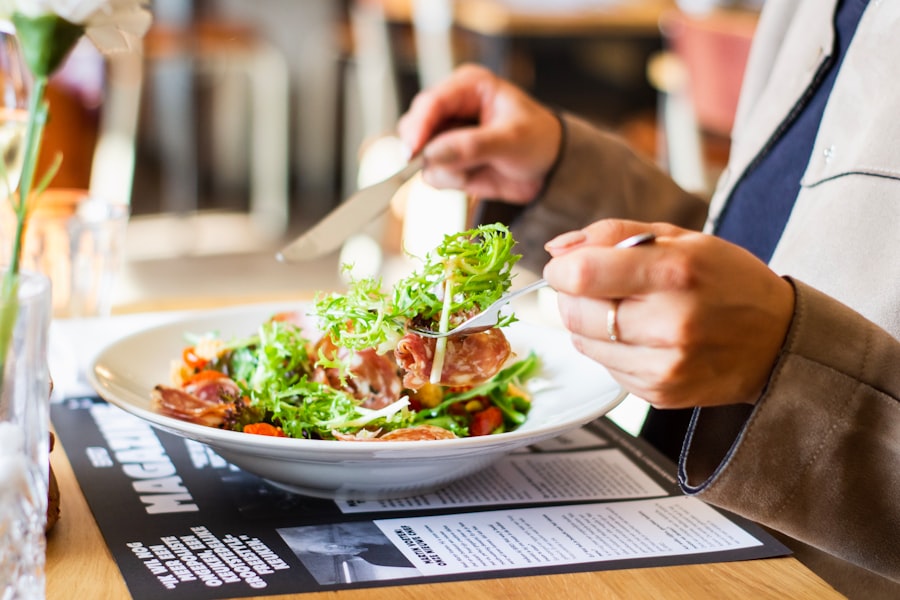
When scanning the menu, prioritize items that feature fresh ingredients and are prepared with minimal added fats or sugars. For example, a salad topped with grilled chicken and a vinaigrette dressing is often a better choice than a creamy pasta dish. Another strategy is to look for meals that are baked or steamed rather than fried or sautéed in heavy sauces.
Many restaurants now offer lighter fare or “health-conscious” sections on their menus, which can be a great resource. Don’t hesitate to ask your server about the healthiest options available; they can often provide valuable insights into the dishes that are both nutritious and delicious. Remember, making healthy choices is about balance; it’s perfectly fine to indulge occasionally, but being mindful of your selections can lead to better overall health.
Portion Control

Portion control is a crucial aspect of maintaining a healthy diet, especially when dining out. Restaurant portions tend to be significantly larger than what you might serve at home, which can lead to overeating if you’re not careful. One effective strategy is to share dishes with your dining companions.
This not only allows you to sample a variety of flavors but also helps keep your portion sizes in check. If sharing isn’t an option, consider asking for a half-portion or taking half of your meal home for later. Another useful tactic is to start with smaller plates or bowls if available.
Research shows that using smaller dishware can trick your brain into thinking you’re consuming more food than you actually are. Additionally, take your time while eating; savor each bite and listen to your body’s hunger cues. It’s easy to lose track of how full you are when you’re engaged in conversation or distracted by the ambiance of the restaurant.
By practicing mindful eating, you can enjoy your meal while also being conscious of portion sizes.
Managing Carbohydrates
Carbohydrates are an essential part of any diet, but managing their intake is particularly important when dining out. Many restaurant dishes are heavy on carbs, from bread and pasta to rice and potatoes. To keep your carbohydrate consumption in check, start by assessing the menu for options that offer whole grains or vegetables as substitutes.
For instance, many places now offer quinoa or brown rice instead of white rice, which can provide more nutrients and fiber. If you find yourself craving a carb-heavy dish, consider balancing it with protein and healthy fats. For example, if you choose a pasta dish, try to add grilled chicken or vegetables to it.
This not only enhances the nutritional value but also helps stabilize your blood sugar levels. Additionally, be cautious with bread baskets; it’s easy to mindlessly munch on bread while waiting for your meal. If you’re tempted, ask your server to remove the basket from the table to avoid unnecessary snacking.
Watching Sodium Intake
| Tip | Description | Benefit | Example |
|---|---|---|---|
| Check the Menu in Advance | Review restaurant menus online to plan your meal ahead of time. | Helps avoid impulsive choices that may spike blood sugar. | Choose grilled chicken salad instead of fried options. |
| Control Portion Sizes | Request smaller portions or share dishes to manage carbohydrate intake. | Prevents overeating and helps maintain blood glucose levels. | Order an appetizer as a main dish. |
| Choose Low Glycemic Index Foods | Select foods that have a low impact on blood sugar. | Promotes steady blood sugar levels after meals. | Opt for whole grains, legumes, and non-starchy vegetables. |
| Limit Sugary Drinks and Desserts | Avoid beverages and sweets high in added sugars. | Reduces risk of blood sugar spikes. | Choose water or unsweetened tea instead of soda. |
| Ask About Ingredients and Preparation | Inquire how dishes are prepared and request modifications if needed. | Ensures meals fit your dietary needs and preferences. | Request dressing on the side or grilled instead of fried. |
| Balance Carbohydrates with Protein and Fiber | Include protein and fiber-rich foods to slow glucose absorption. | Helps maintain stable blood sugar levels. | Pair a sandwich with a side salad or beans. |
| Monitor Blood Sugar Levels | Check blood glucose before and after eating out to understand impact. | Provides insight for better meal planning in the future. | Use a glucose meter to track readings. |
Sodium is another component of restaurant meals that often goes unnoticed but can significantly impact your health. Many dishes are laden with salt, which can lead to high blood pressure and other health issues if consumed in excess. To keep your sodium intake in check while dining out, start by asking about how dishes are prepared and whether they can be made with less salt.
Many chefs are willing to accommodate dietary requests if asked politely. When reviewing the menu, pay attention to items that are labeled as “smoked,” “cured,” or “pickled,” as these often contain higher sodium levels. Opting for fresh ingredients and asking for dressings or sauces on the side can also help you control your sodium intake.
By being proactive about your choices and communicating with your server, you can enjoy a delicious meal without compromising your health.
Alcohol Consumption
Alcohol can be a delightful addition to any dining experience, but it’s essential to consume it mindfully. Many cocktails and wines come with hidden calories and sugars that can quickly add up. If you choose to drink alcohol while dining out, consider opting for lighter options such as wine spritzers or spirits mixed with soda water instead of sugary mixers.
These choices can help reduce calorie intake while still allowing you to enjoy a drink. Additionally, be aware of portion sizes when it comes to alcohol. A standard serving of wine is typically five ounces, while cocktails can vary widely in size and ingredients.
If you’re unsure about the serving size, don’t hesitate to ask your server for guidance. It’s also wise to pace yourself; alternating between alcoholic beverages and water can help keep you hydrated and prevent overindulgence.
Communication with the Waitstaff
Effective communication with your waitstaff can significantly enhance your dining experience and help you make healthier choices. Don’t hesitate to ask questions about the menu items; inquire about ingredients, preparation methods, and portion sizes. Most servers are knowledgeable about their restaurant’s offerings and can provide valuable insights that may not be immediately apparent from the menu.
If you have specific dietary restrictions or preferences, make sure to communicate them clearly when ordering. Whether you’re vegetarian, gluten-free, or watching your calorie intake, most restaurants are willing to accommodate special requests if they know in advance. Building rapport with your server can also lead to personalized recommendations that align with your health goals while still allowing you to enjoy a satisfying meal.
Planning Ahead for Special Occasions
Special occasions often involve dining out, whether it’s a birthday celebration or an anniversary dinner. To ensure that these events remain enjoyable without derailing your health goals, planning ahead is key. Before heading out, take some time to research the restaurant’s menu online.
This allows you to identify healthier options in advance and reduces the likelihood of making impulsive choices when faced with tempting dishes. Consider making reservations at restaurants known for their healthy offerings or those that allow customization of meals. If you’re celebrating with friends or family, suggest sharing several dishes so everyone can enjoy a variety of flavors without overindulging in any one item.
By approaching special occasions with a plan in mind, you can celebrate while still prioritizing your health and well-being. In conclusion, navigating restaurant menus and making healthy choices doesn’t have to be an overwhelming experience. By understanding the menu, practicing portion control, managing carbohydrates and sodium intake, communicating effectively with waitstaff, and planning ahead for special occasions, you can enjoy dining out while staying aligned with your health goals.
Remember that balance is key; it’s perfectly acceptable to indulge occasionally as long as you remain mindful of your overall dietary habits. With these strategies in hand, you’ll be well-equipped to savor every meal without compromising your well-being.